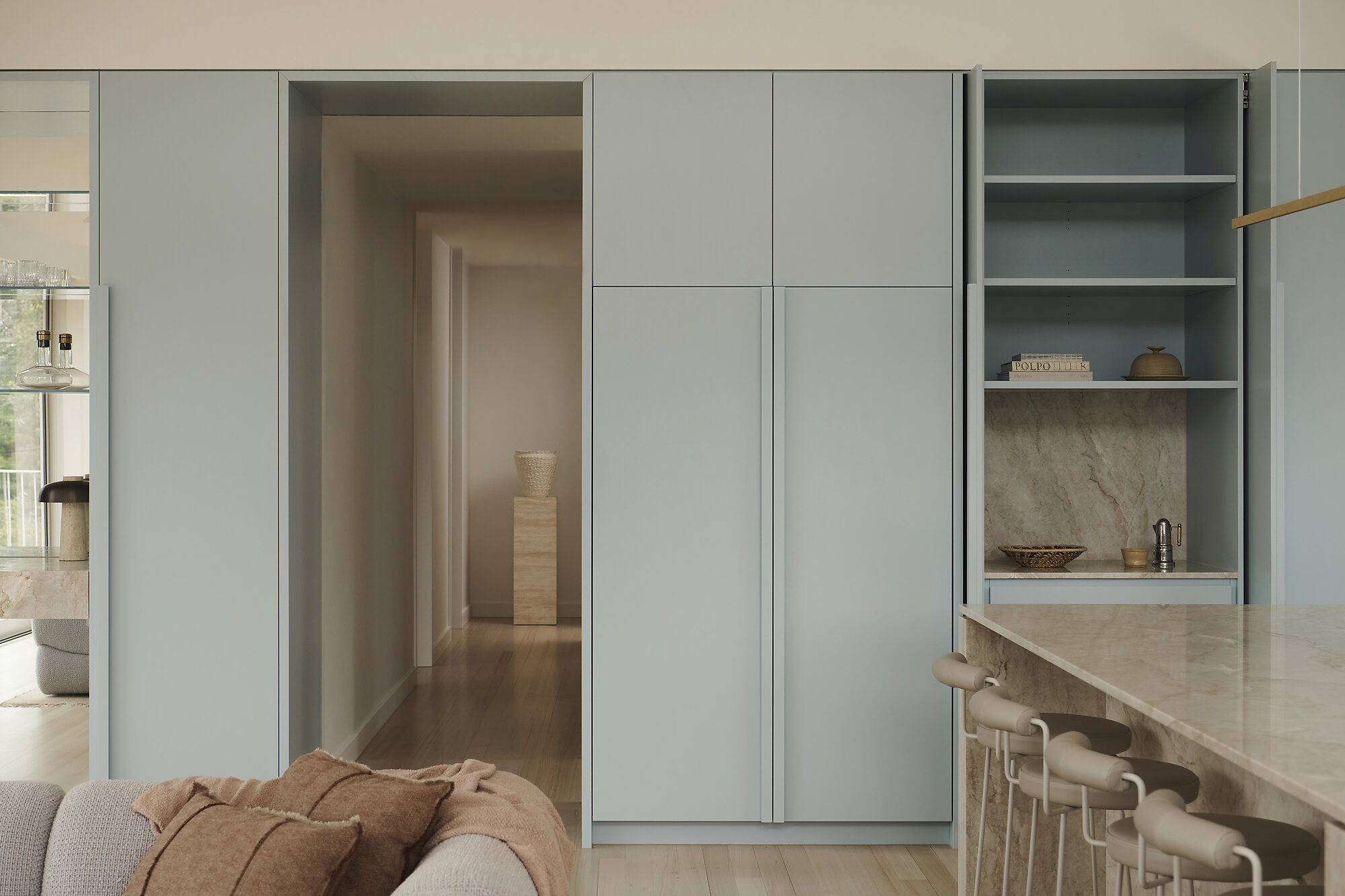
Portsea Treetop House
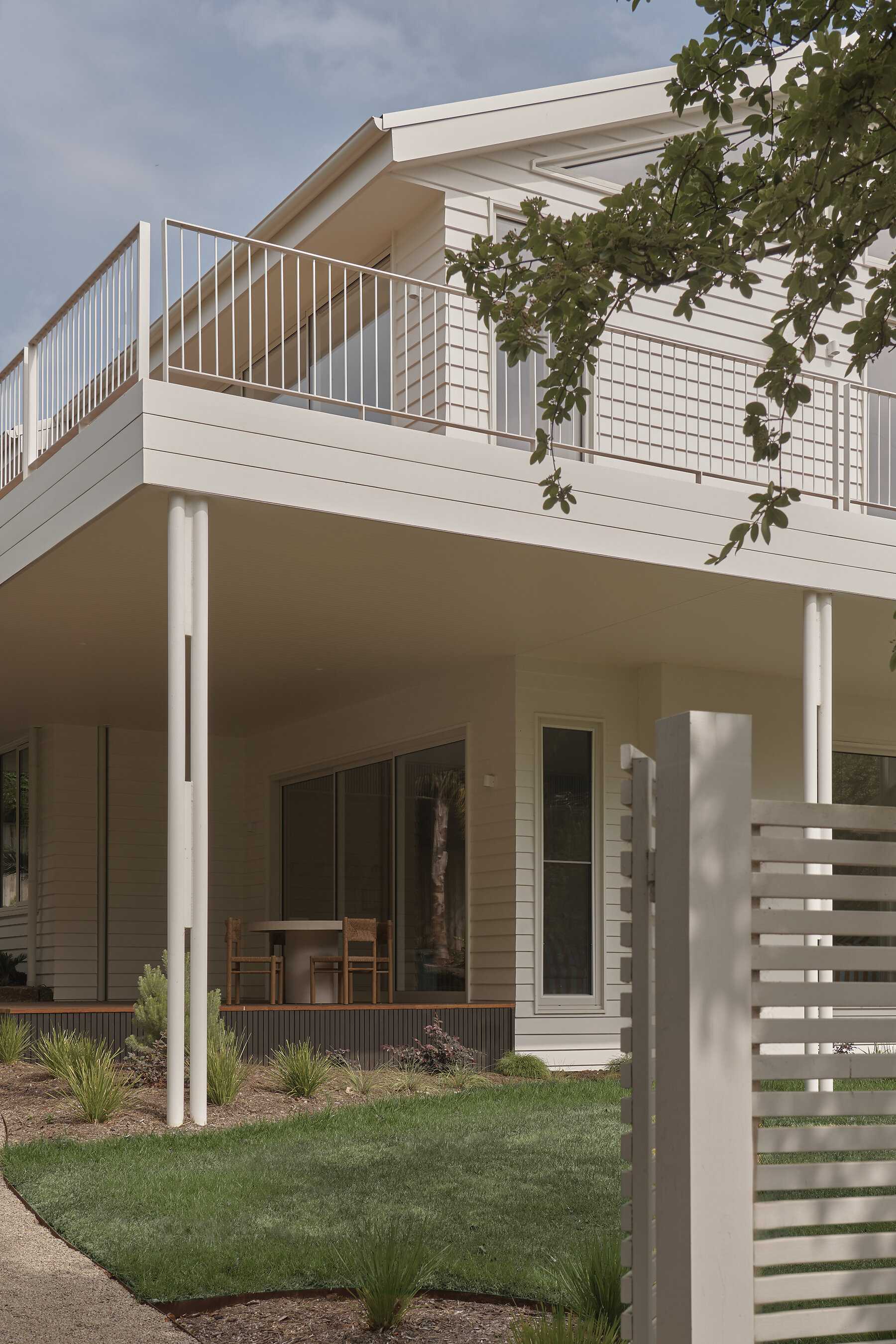
Portsea Treetop House reinterprets a two-storey weatherboard home, reinforcing its coastal identity through refined planning and meticulous detailing. Conceived as a calm, enduring retreat, the design celebrates sea glimpses and treetop outlooks while restoring the home’s relaxed seaside character.
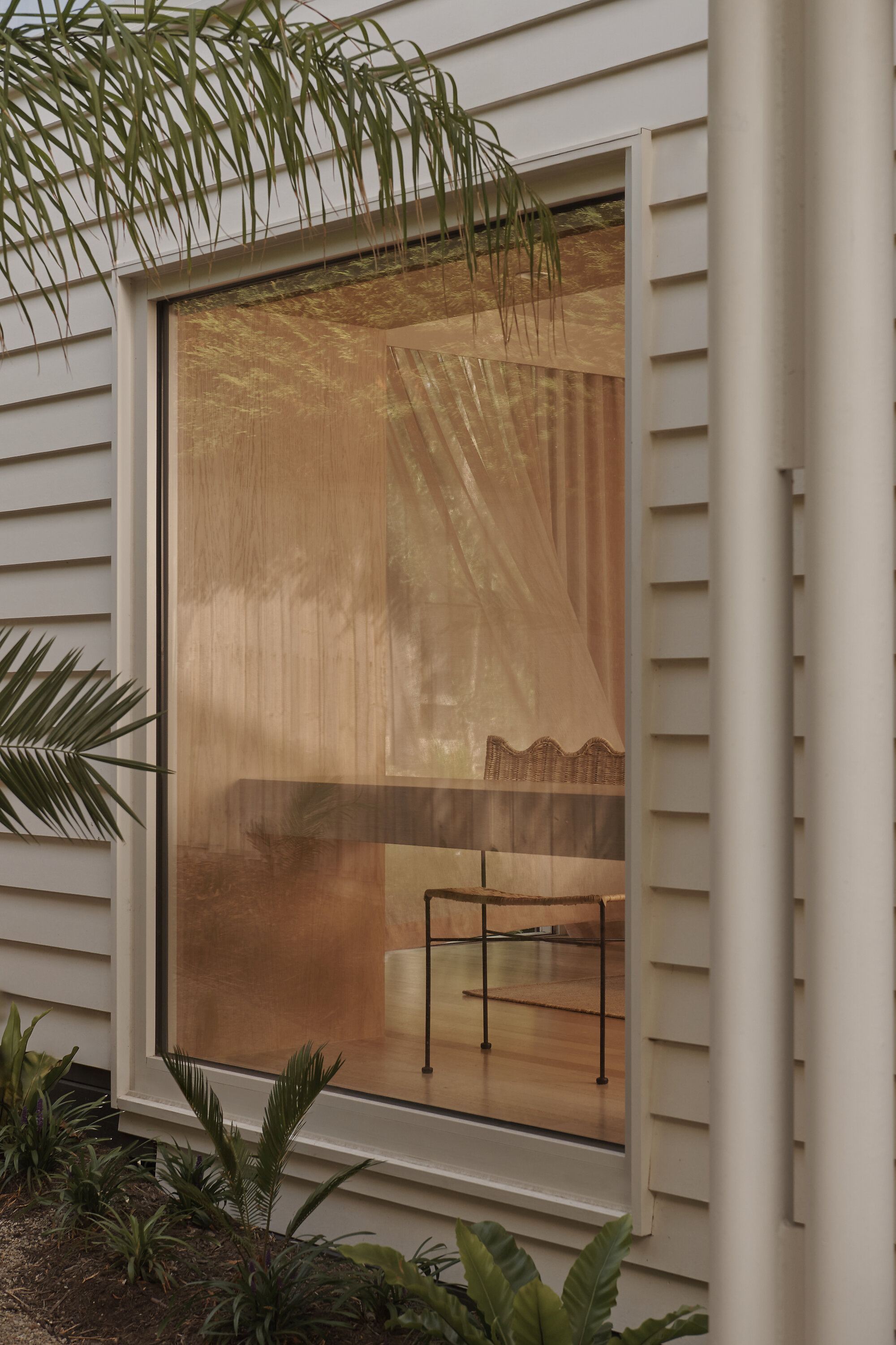
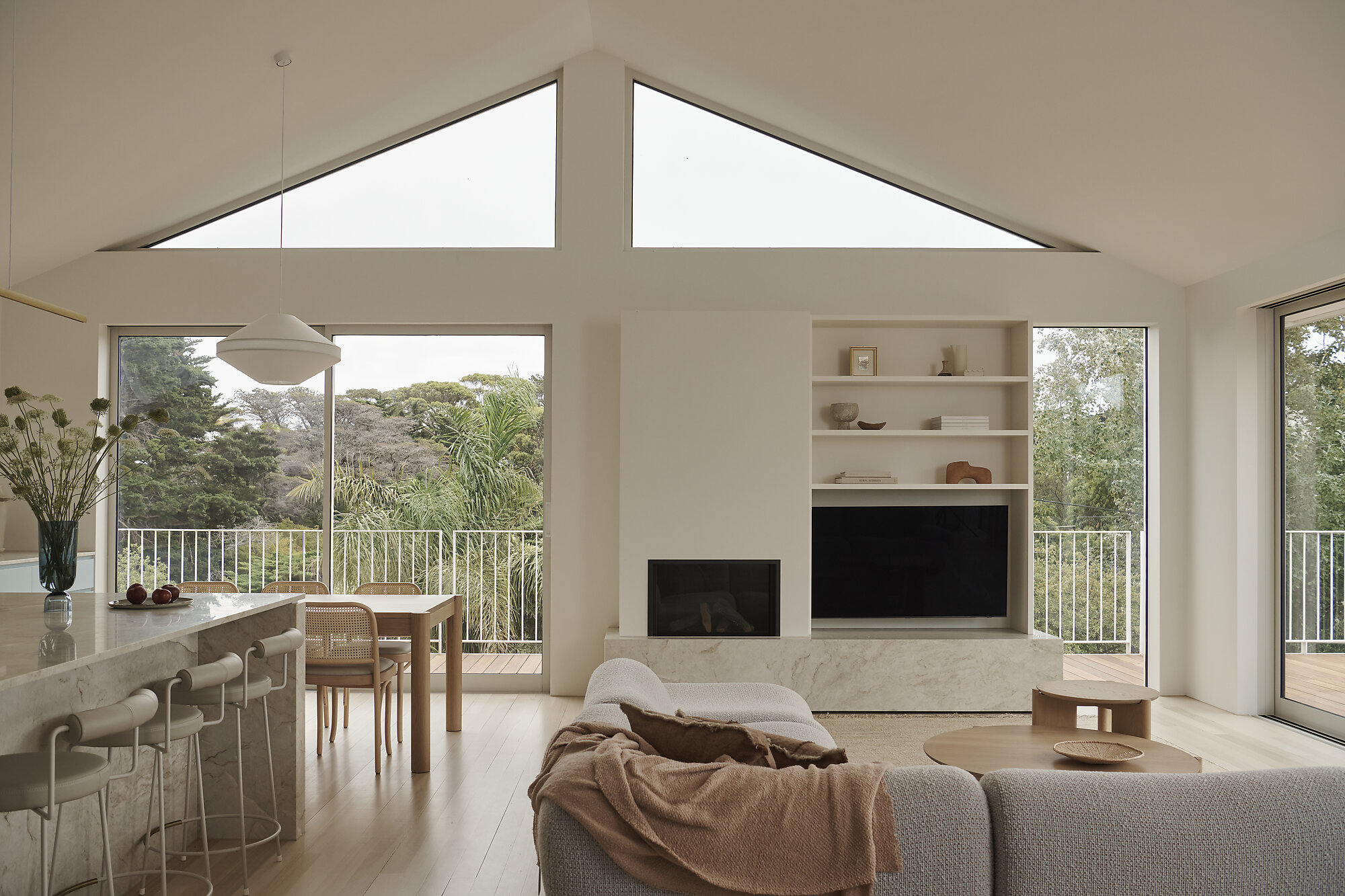
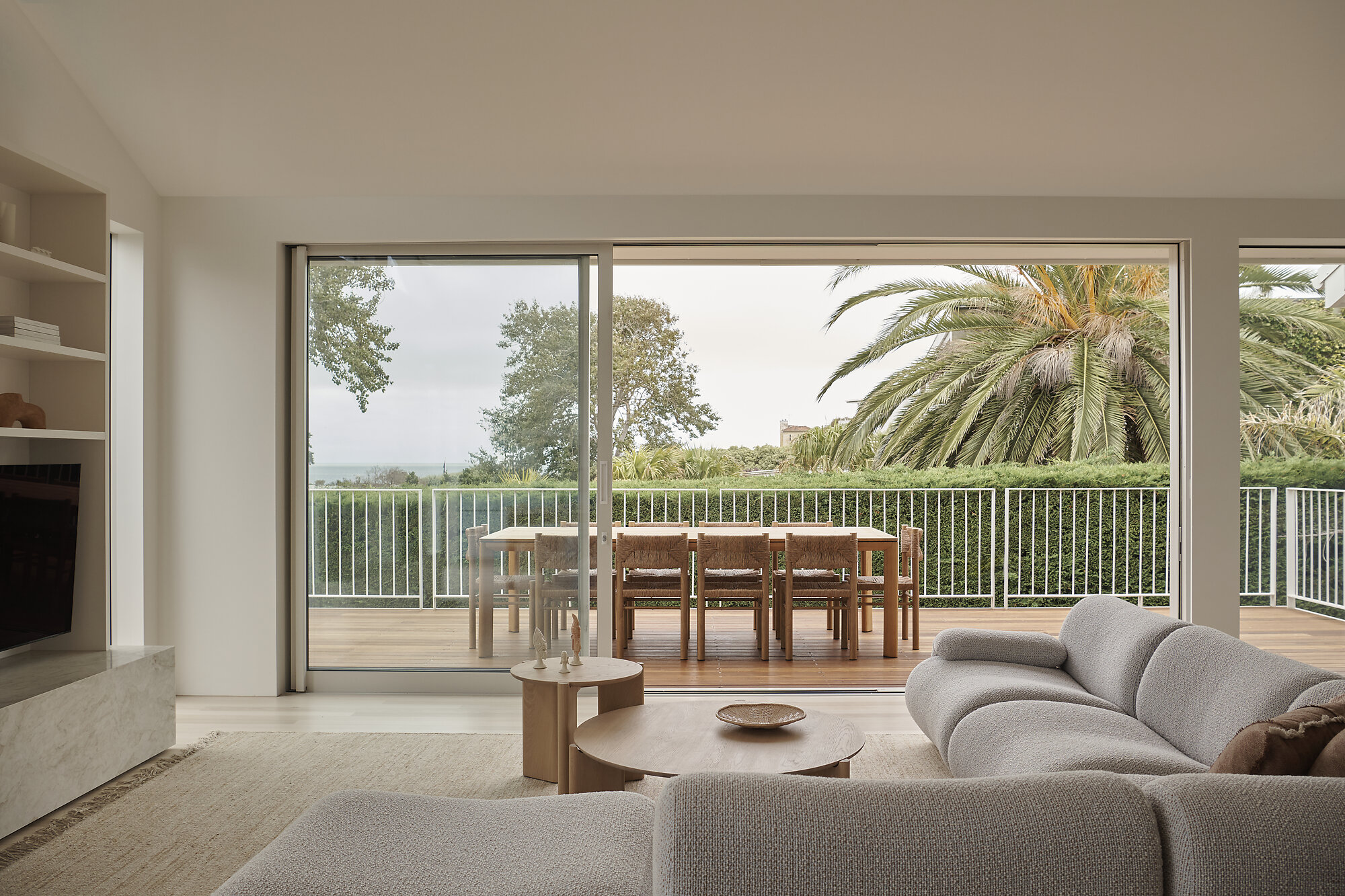
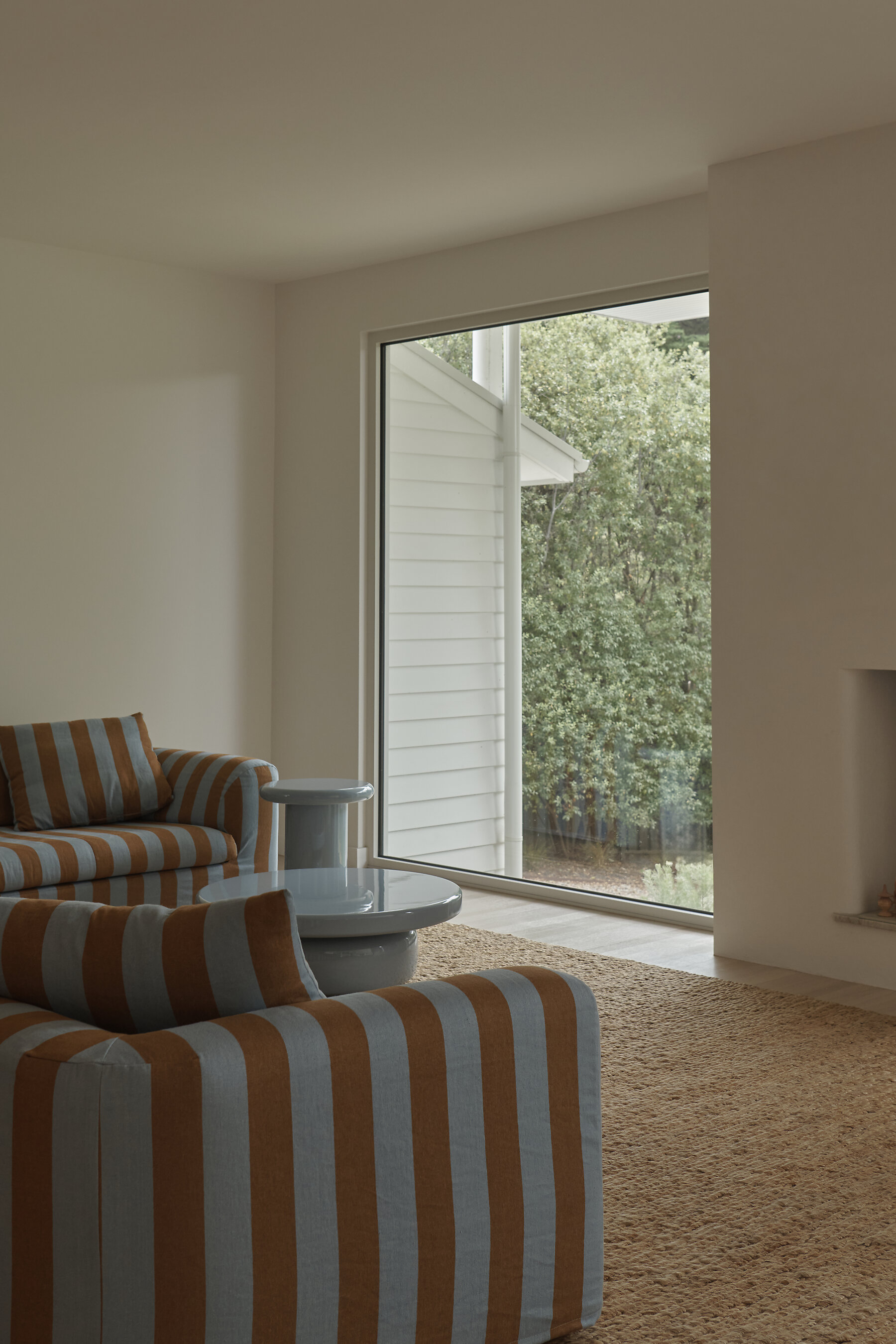
Previously fragmented spaces are unified into a cohesive layout oriented to views and light. Openings are realigned to frame outlooks and draw daylight deep within, while expansive sliding doors dissolve the boundary between interior and exterior.
A new timber deck extends the living and dining areas, creating an expansive area that captures sea breezes and elevated views. This addition strengthens the home’s connection to site, encouraging seasonal, open-air living.
Retaining the existing structure supports sustainability, while upgraded glazing and passive ventilation improve thermal performance. The result is an interior that feels effortless and relaxed, underpinned by careful detailing, spatial clarity and considered restraint.
Photography by Cricket Saleh
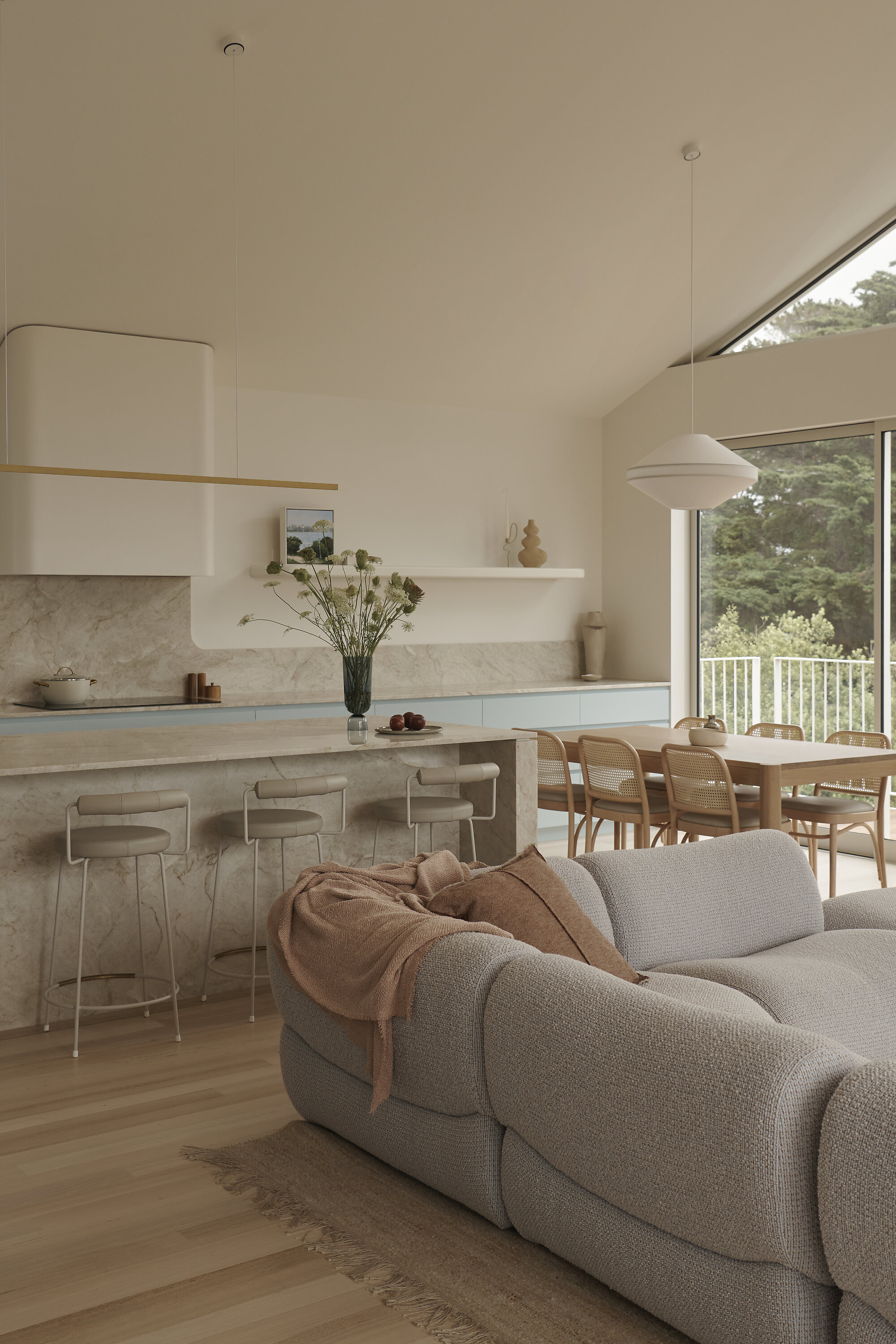
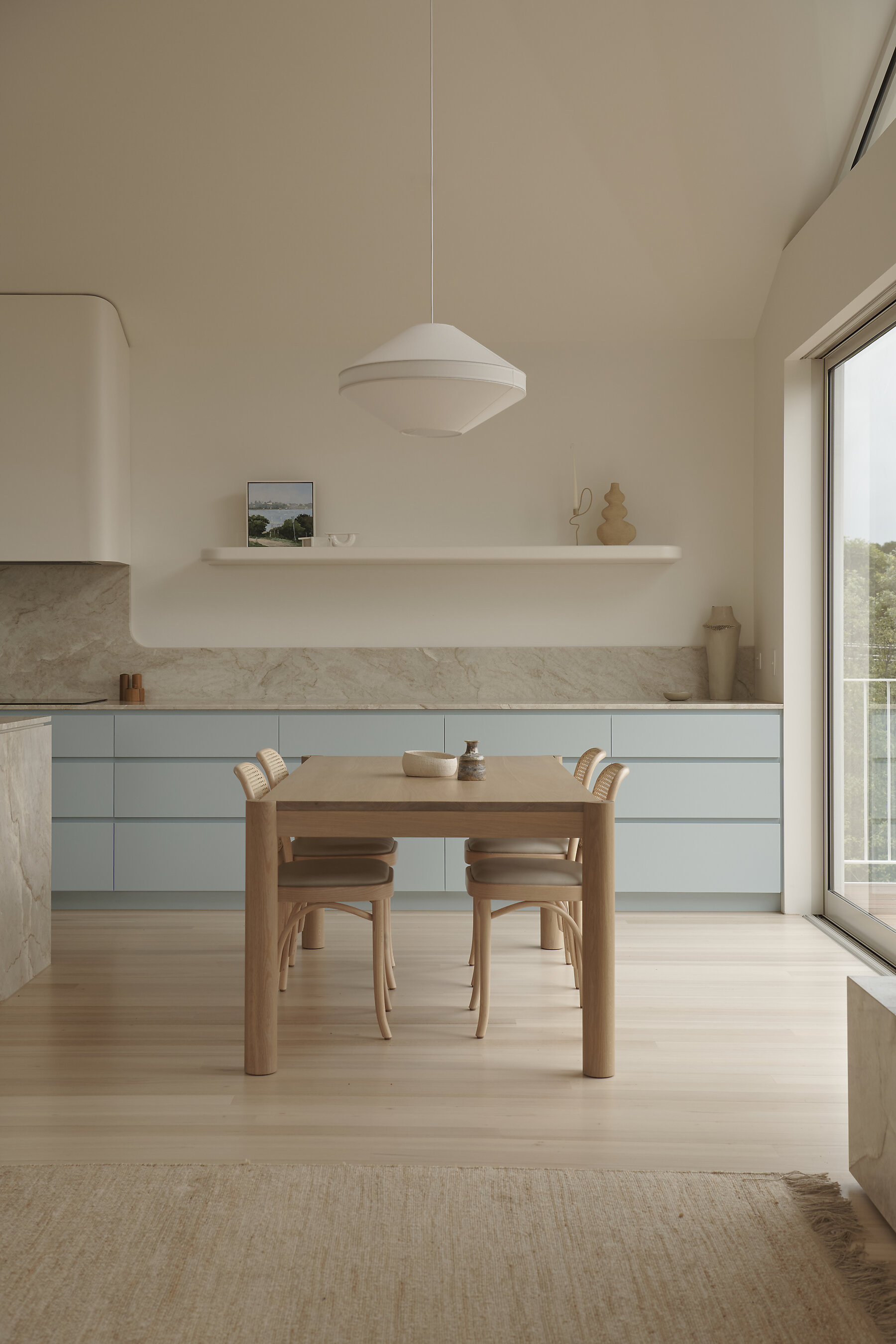
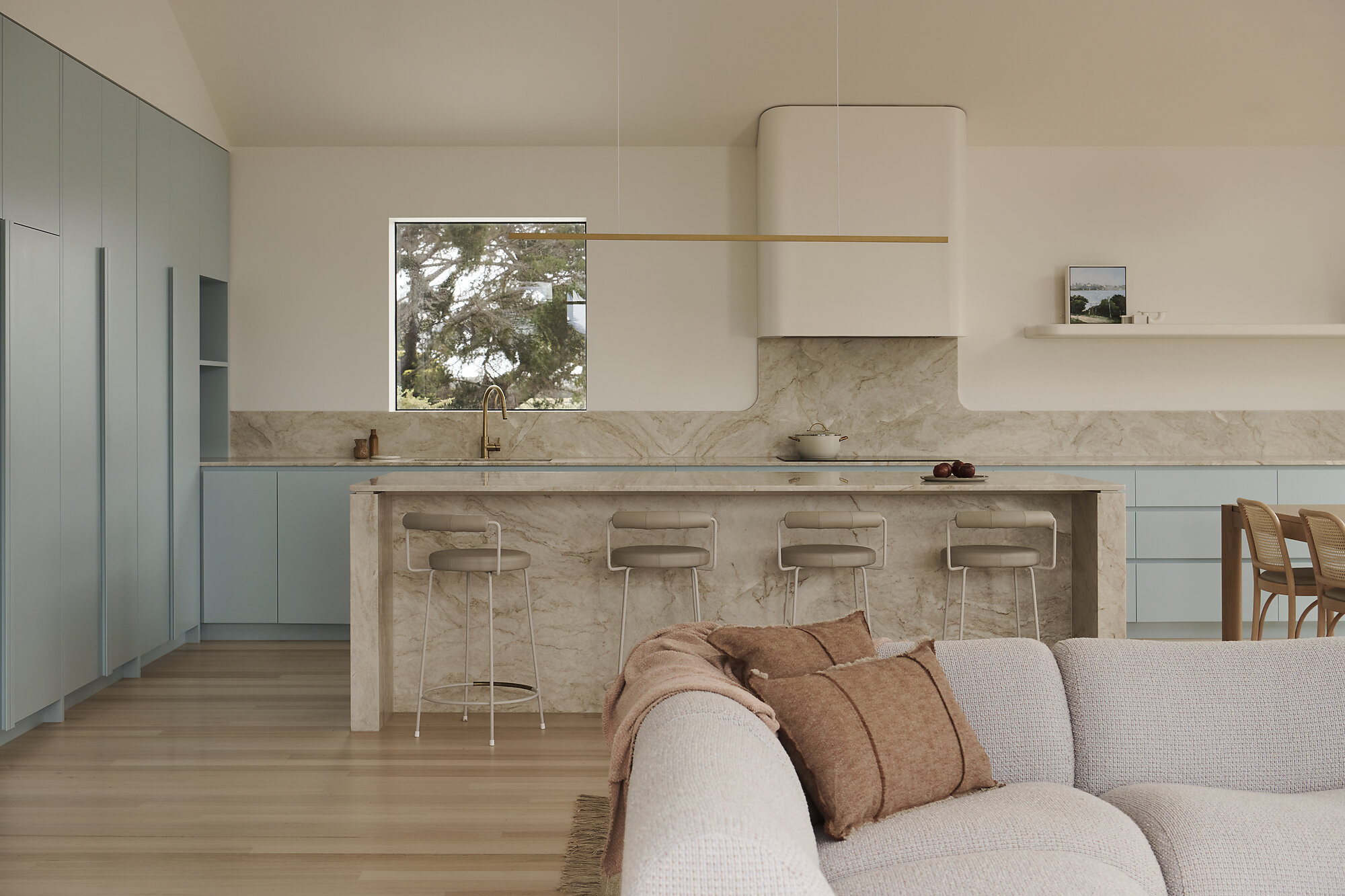
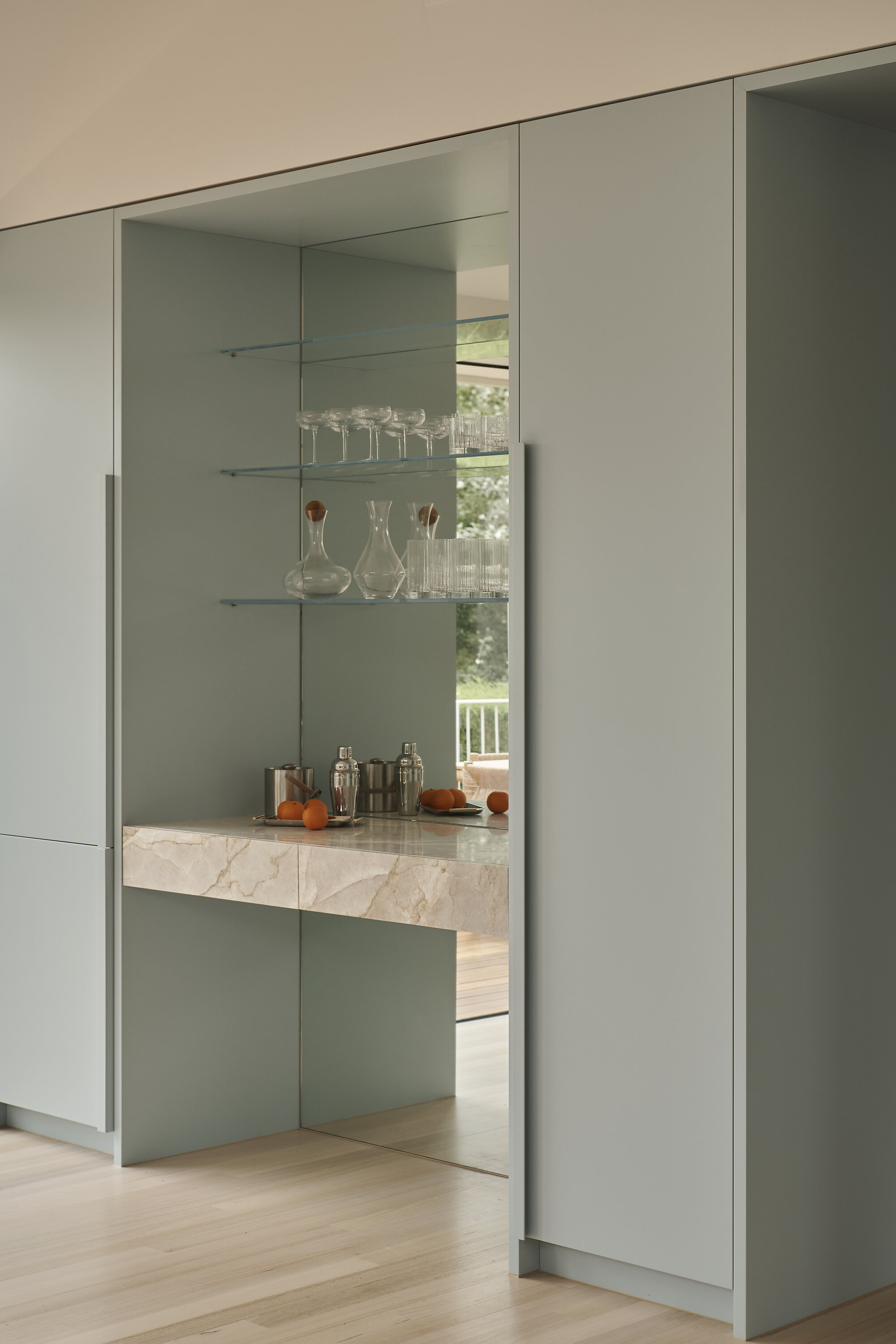
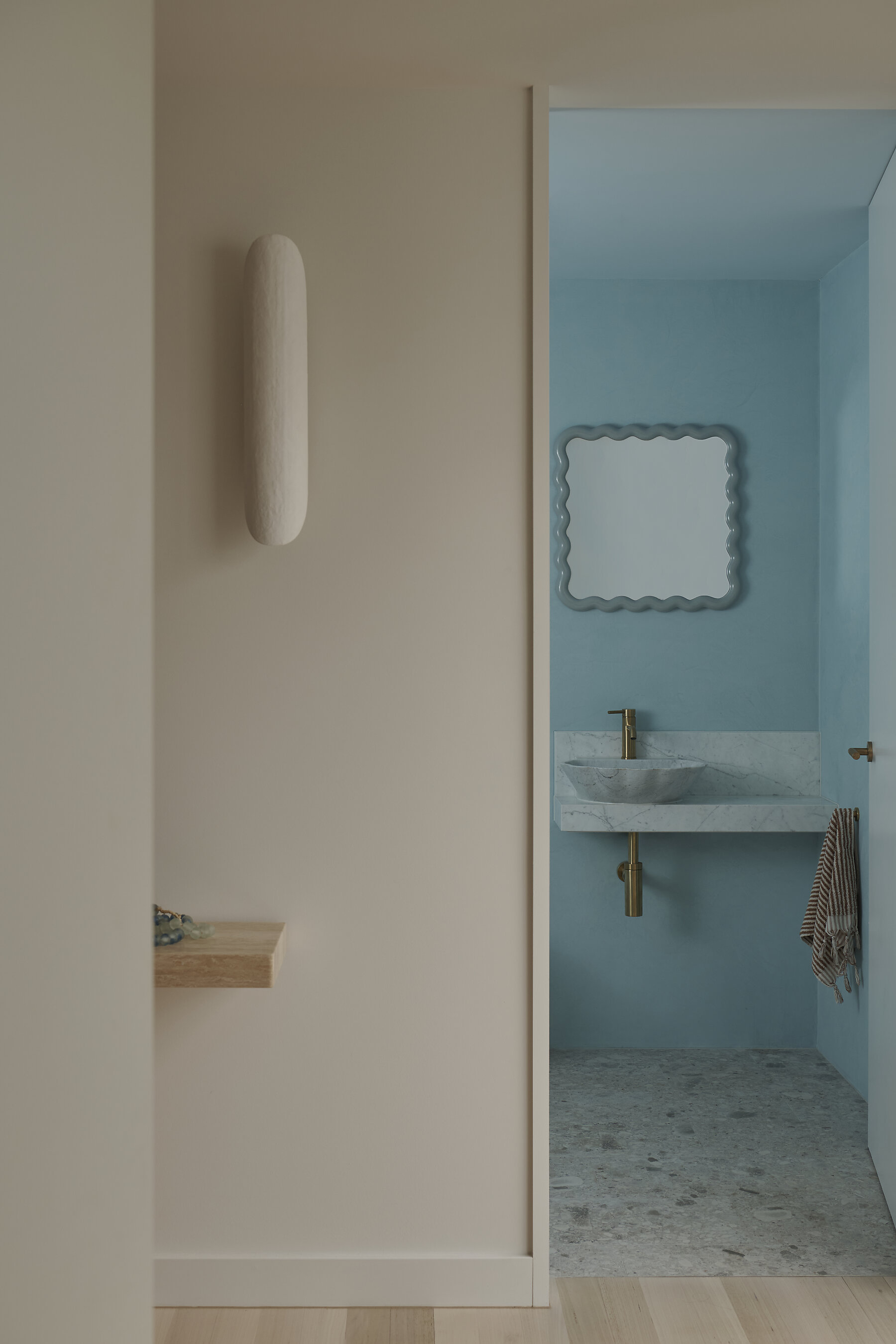
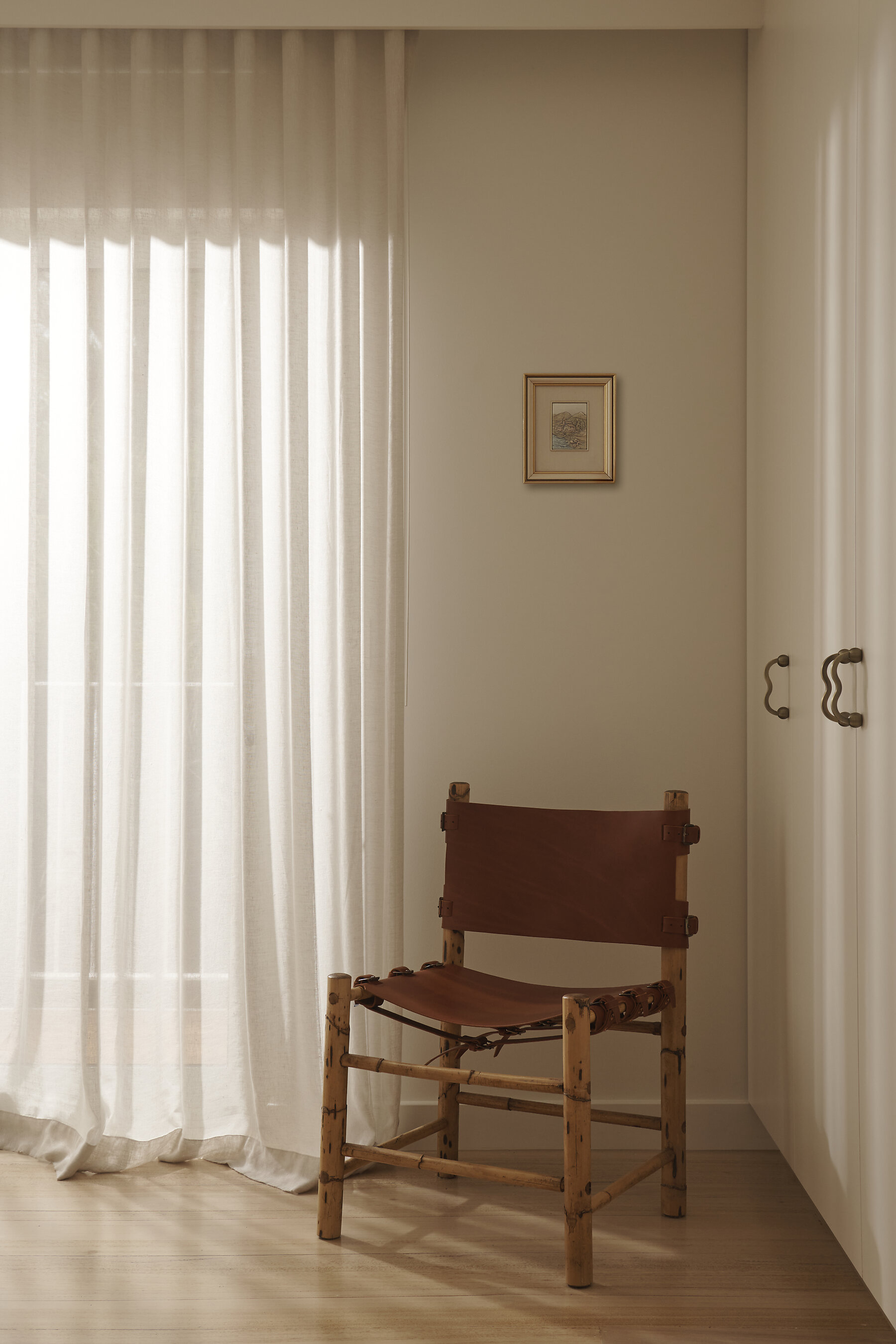
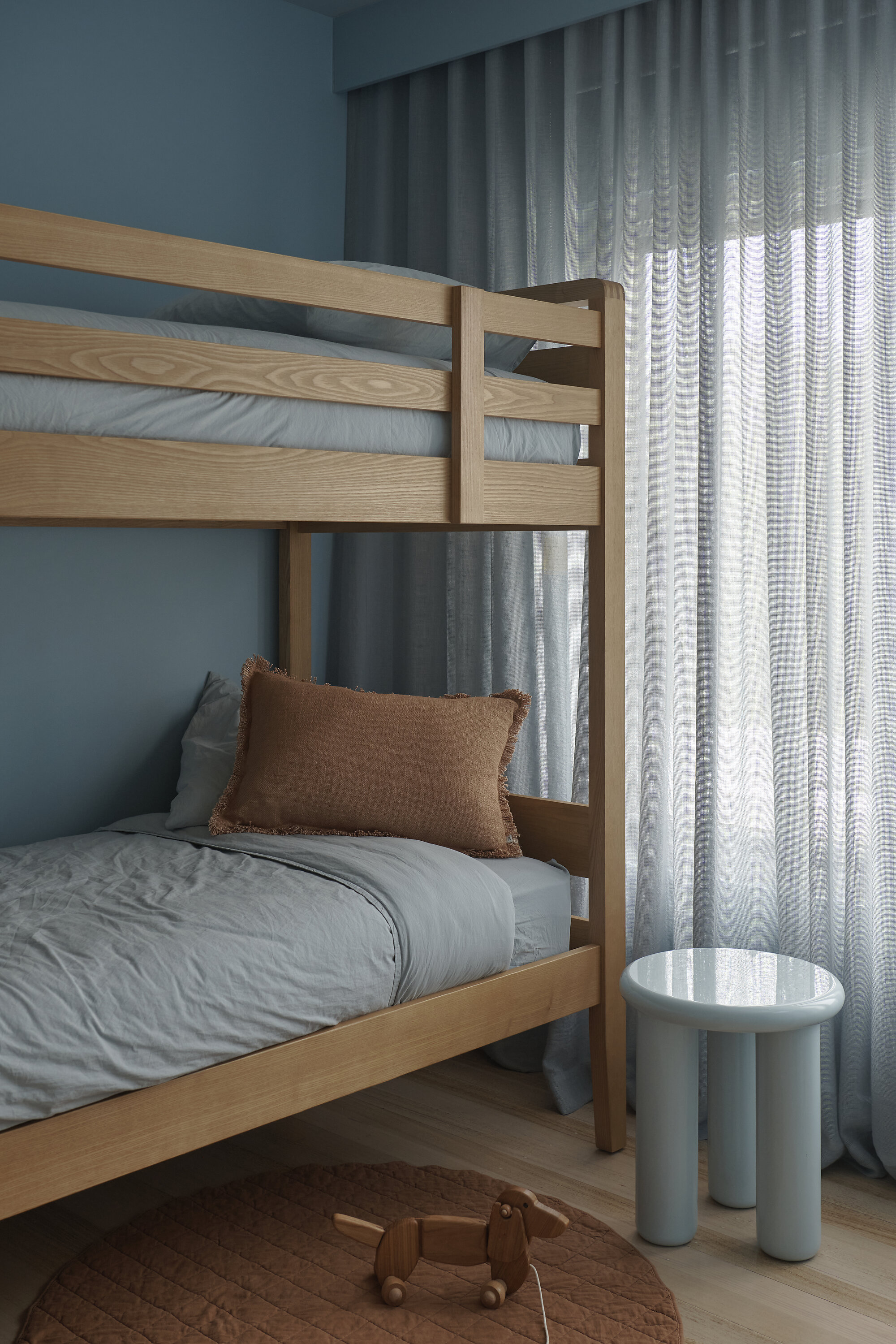
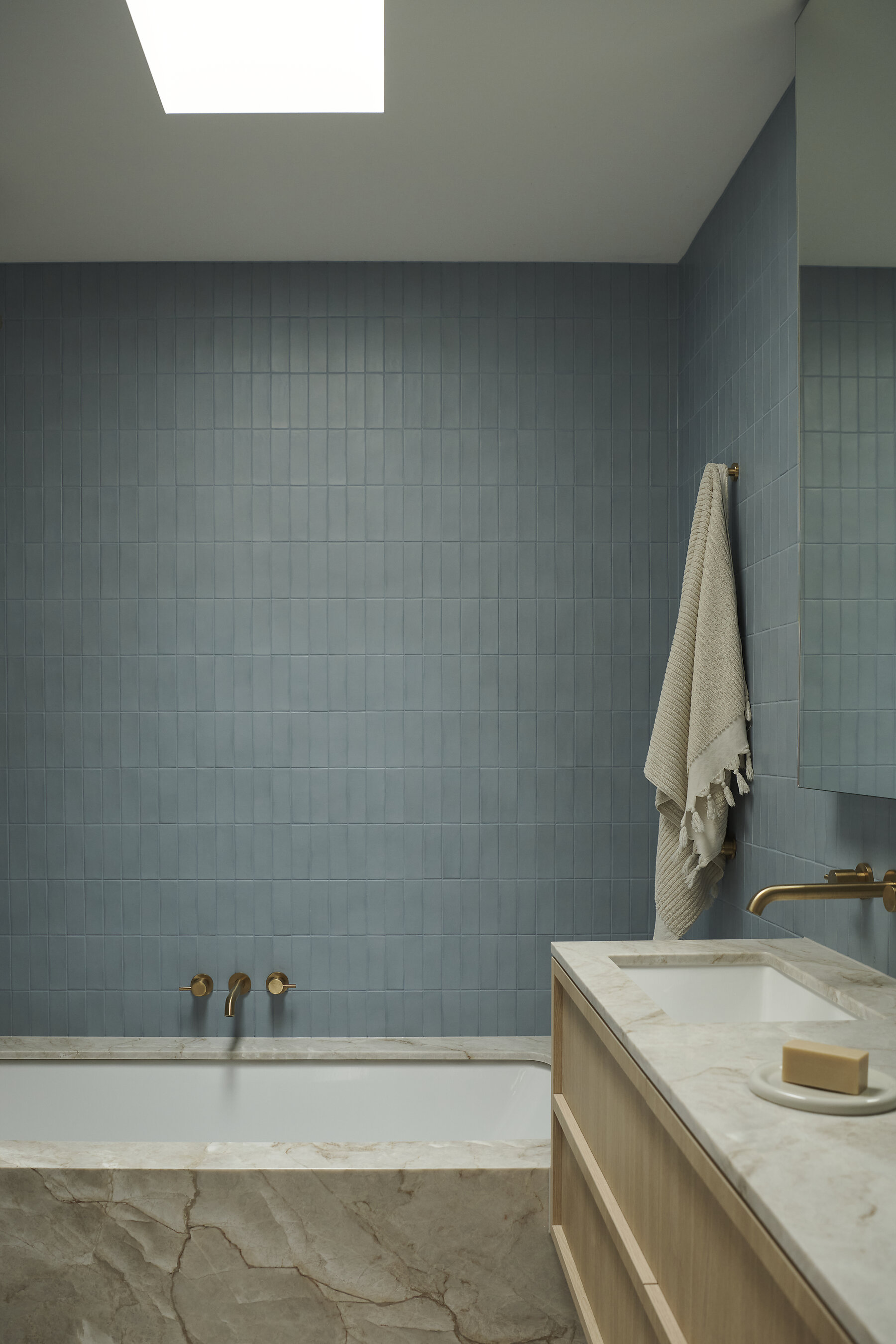
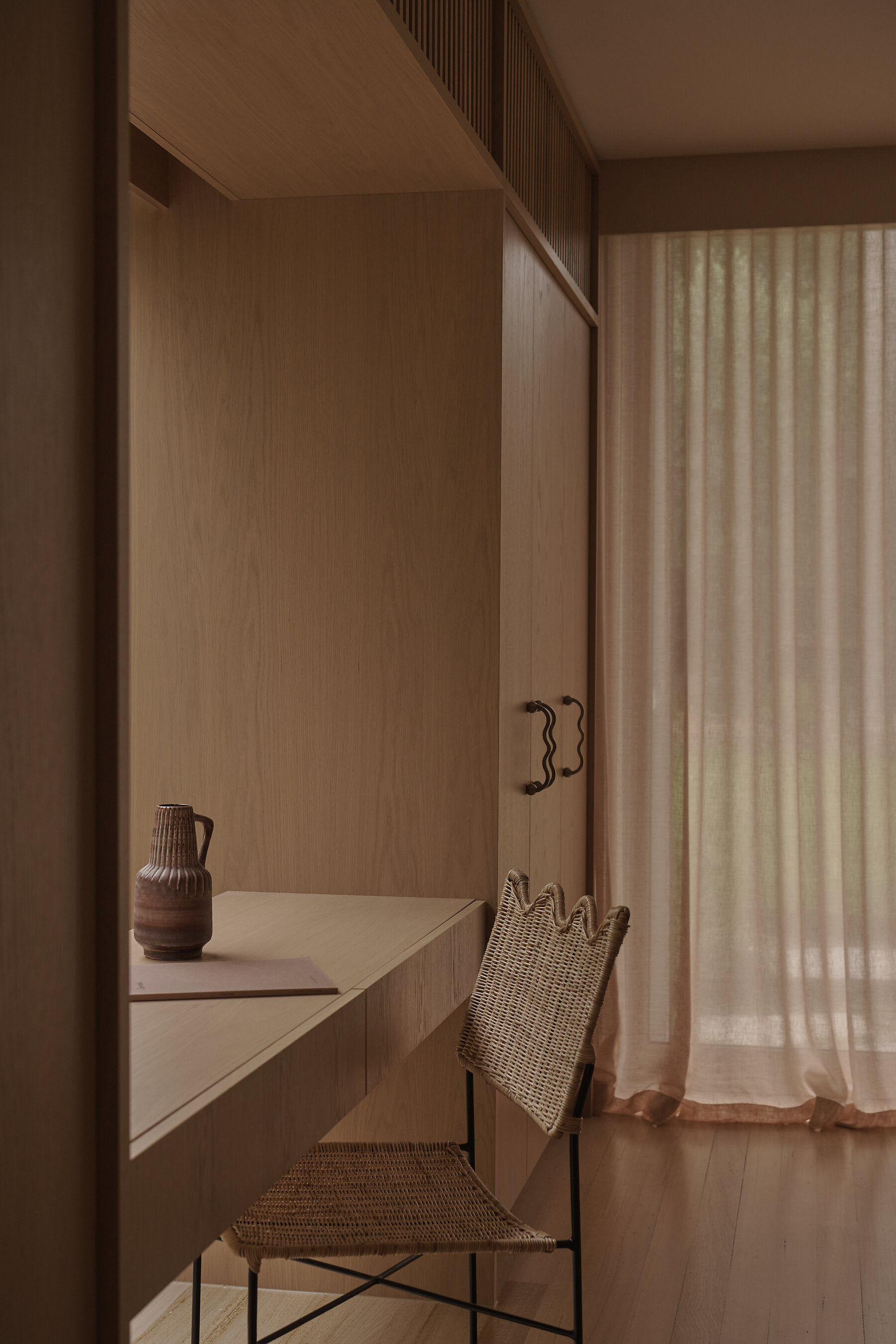
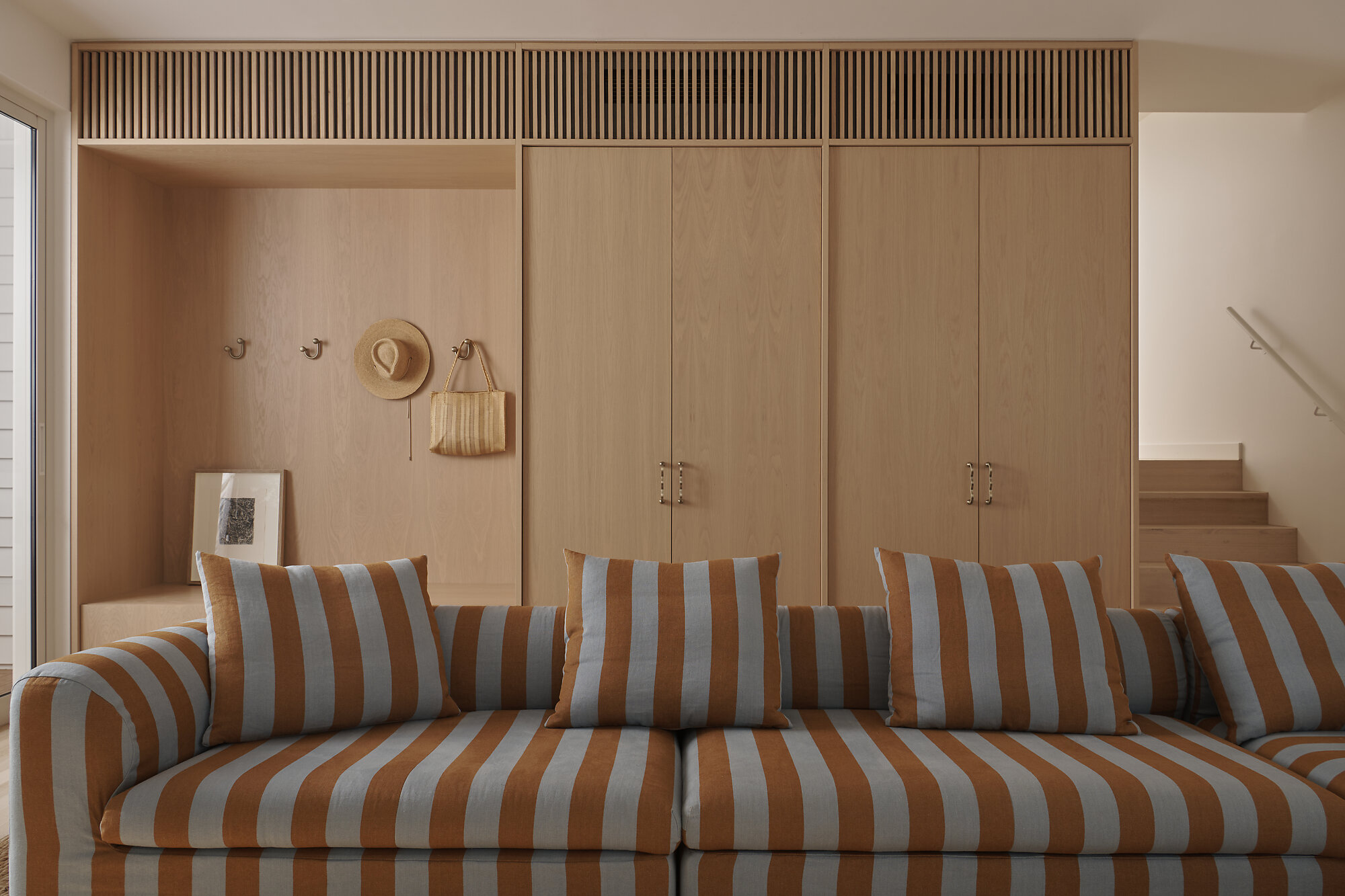
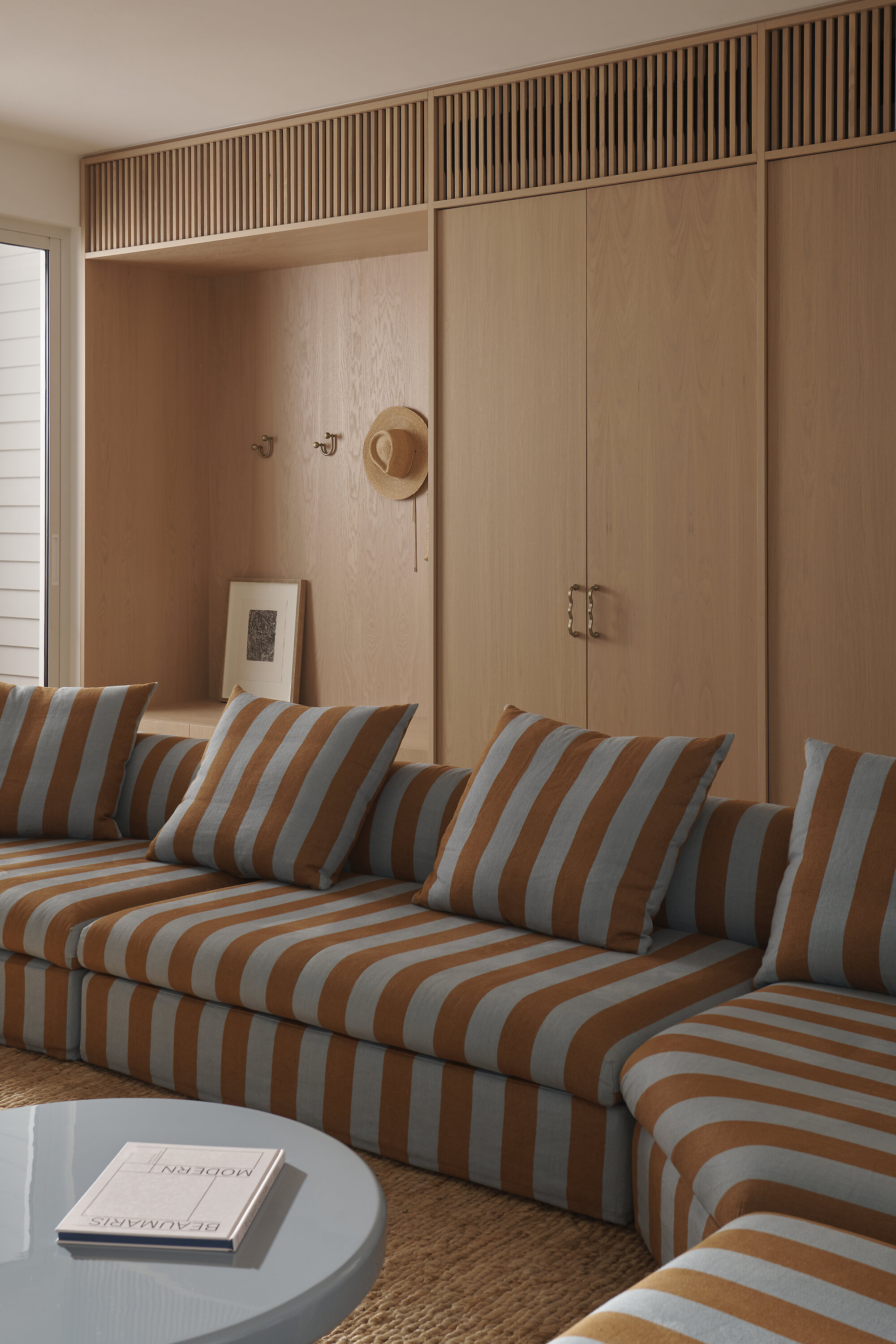
The joinery is resolved with exceptional clarity, where curved brass hardware, seamless stone interfaces and consistent datum lines establish a sense of visual calm. This restraint allows the soft blue and earthy-toned palette to anchor the interior while subtly referencing the surrounding landscape.
Sandy-toned quartzite is expressed as sculptural, monolithic forms that wrap the island and fireplace hearth. Finely resolved junctions emphasise both craftsmanship and a sense of permanence, reinforcing the architectural intent.
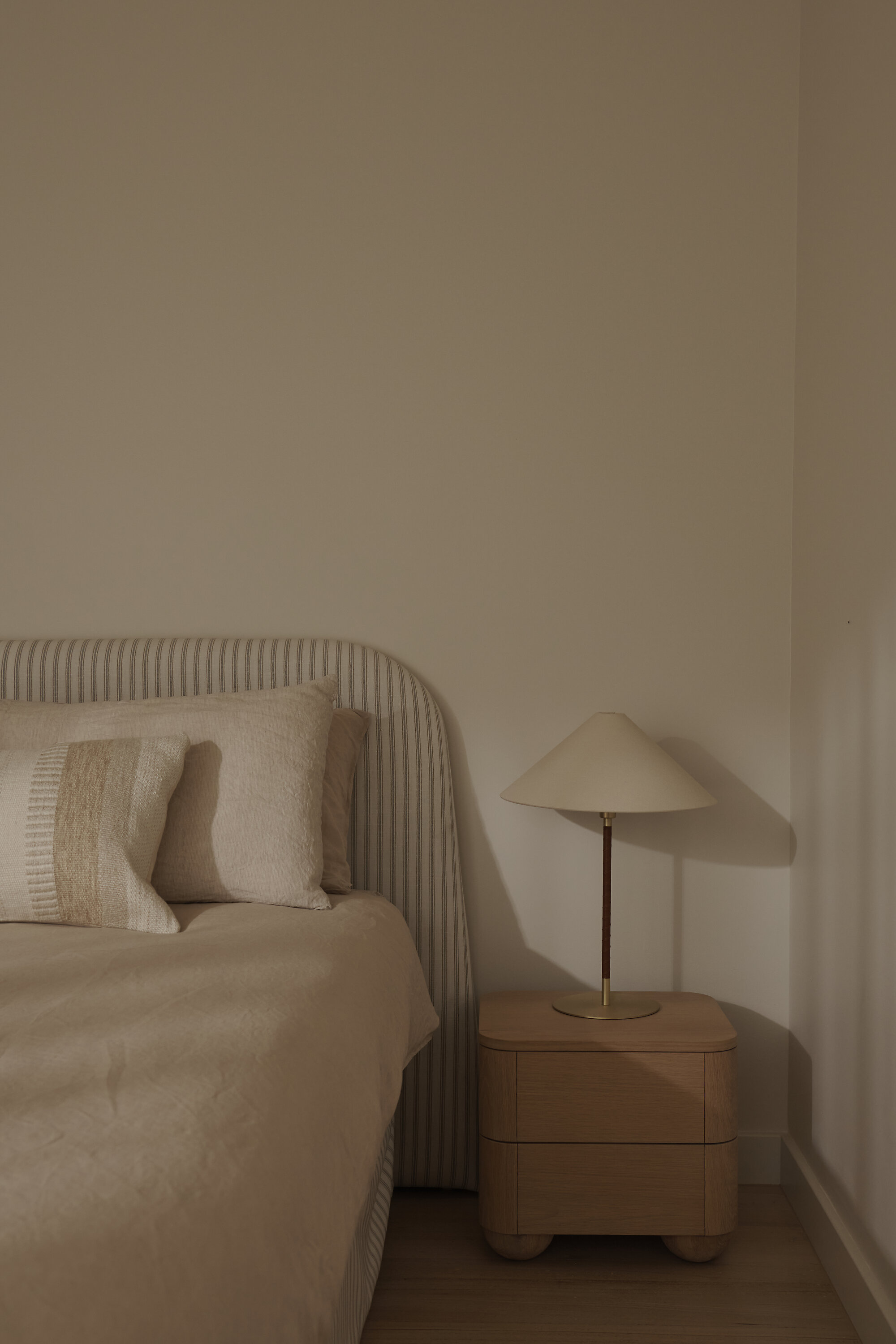
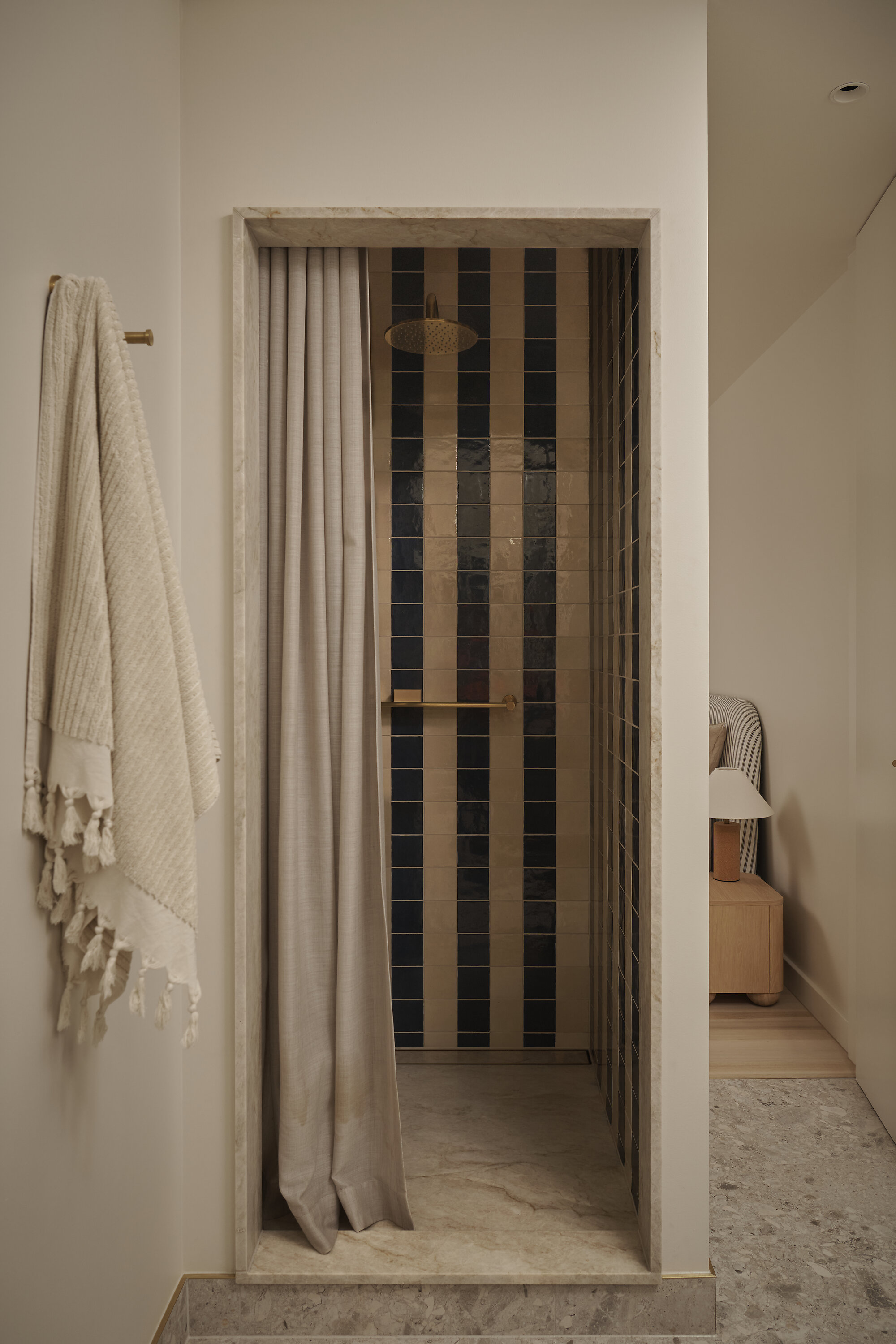
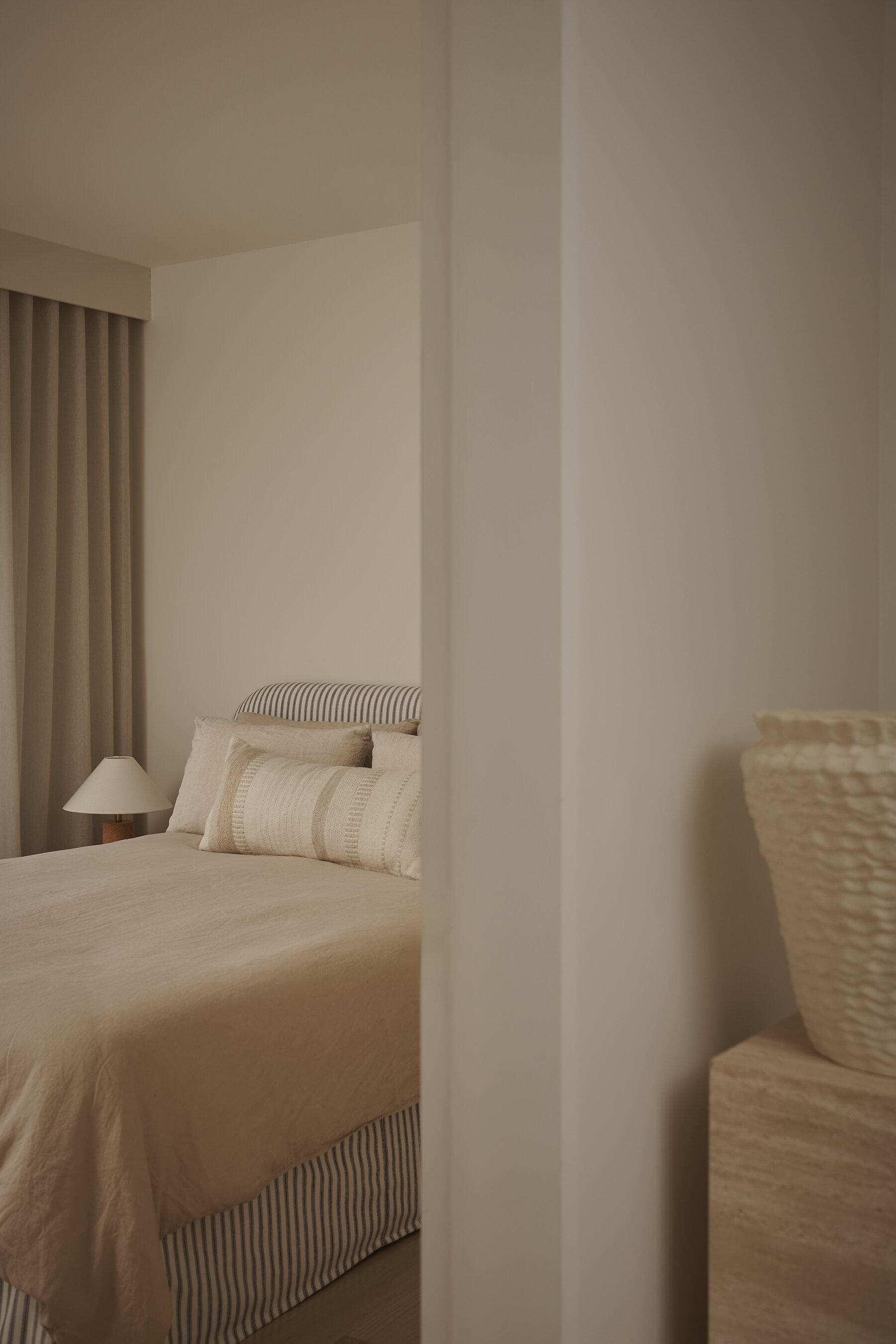
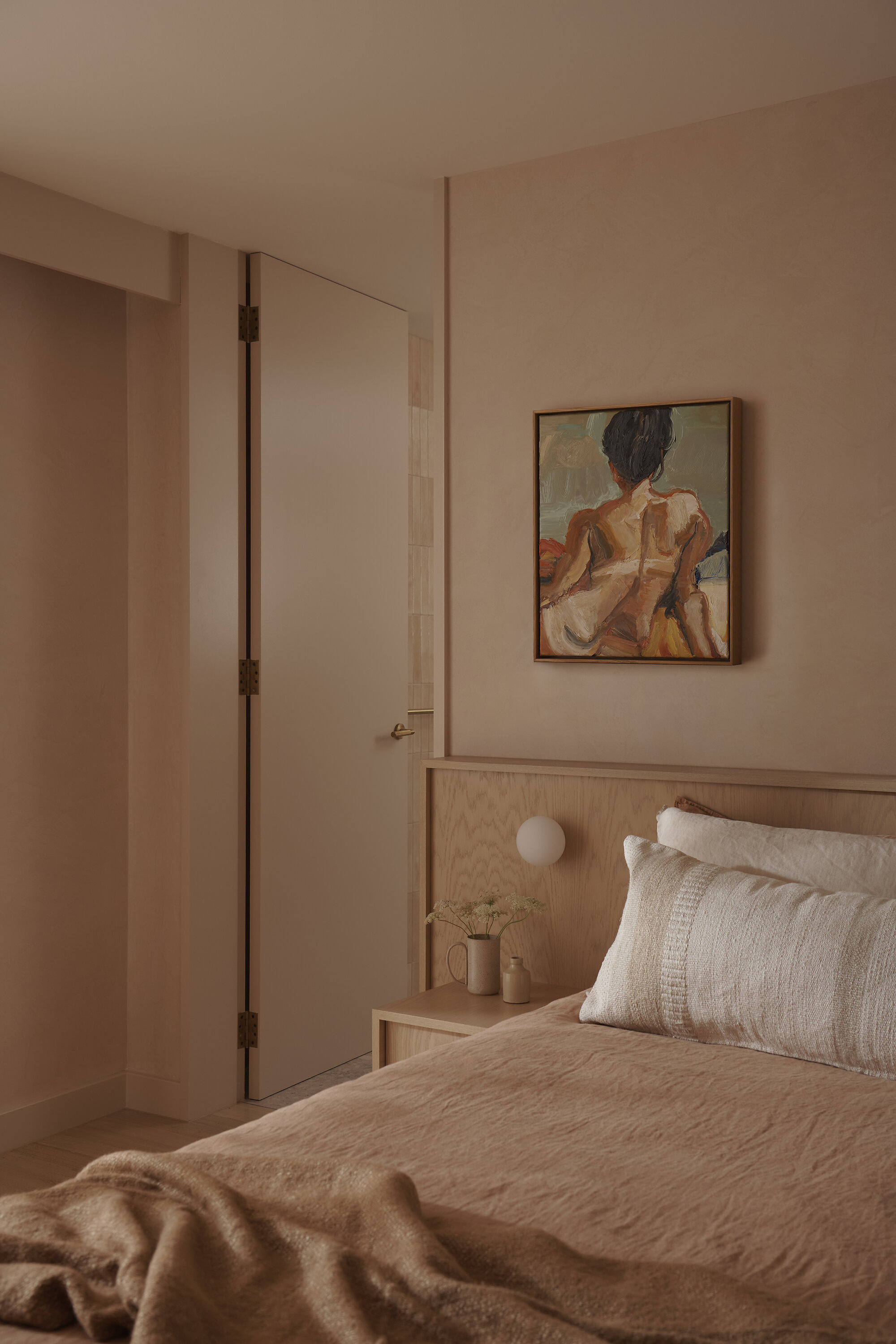
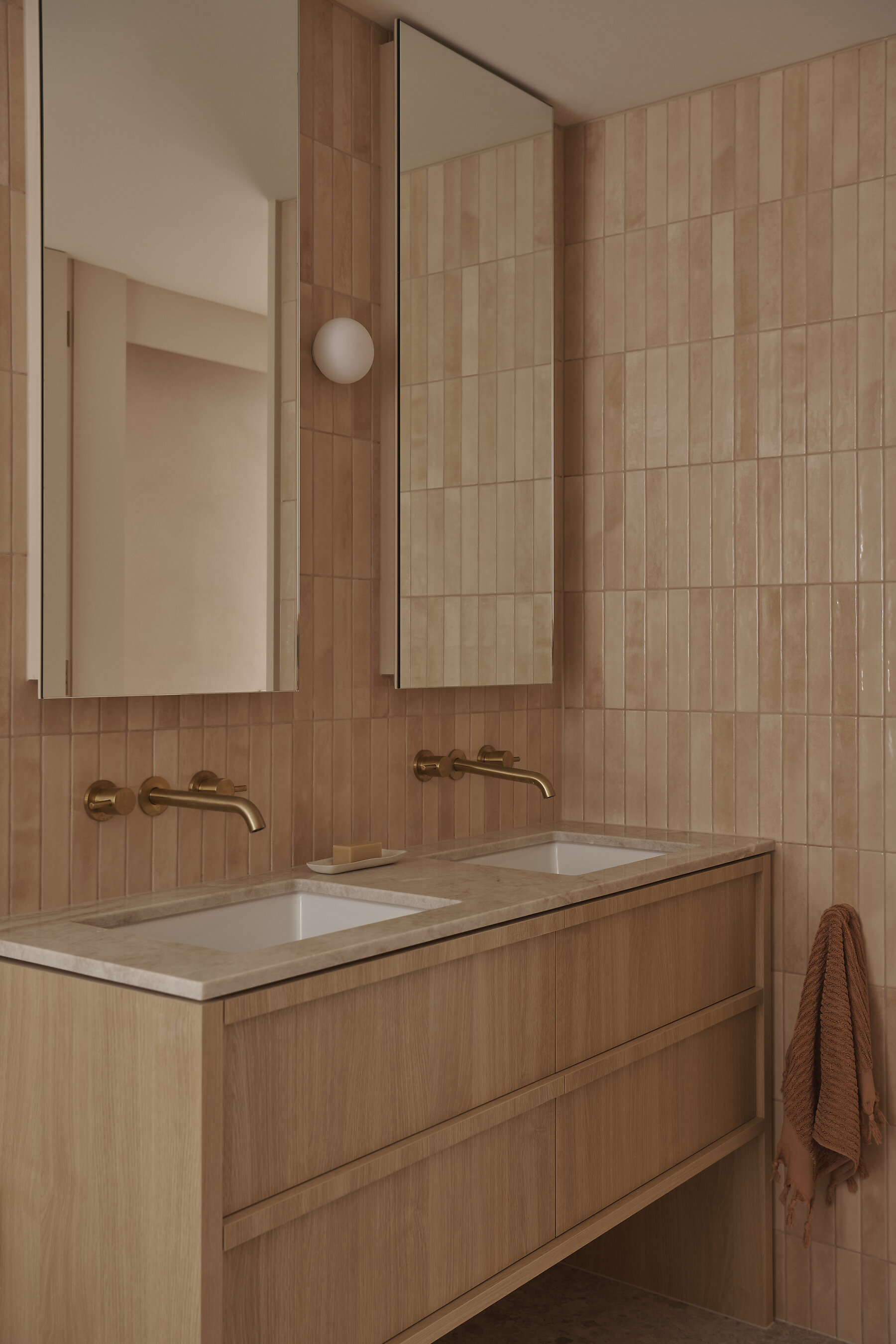
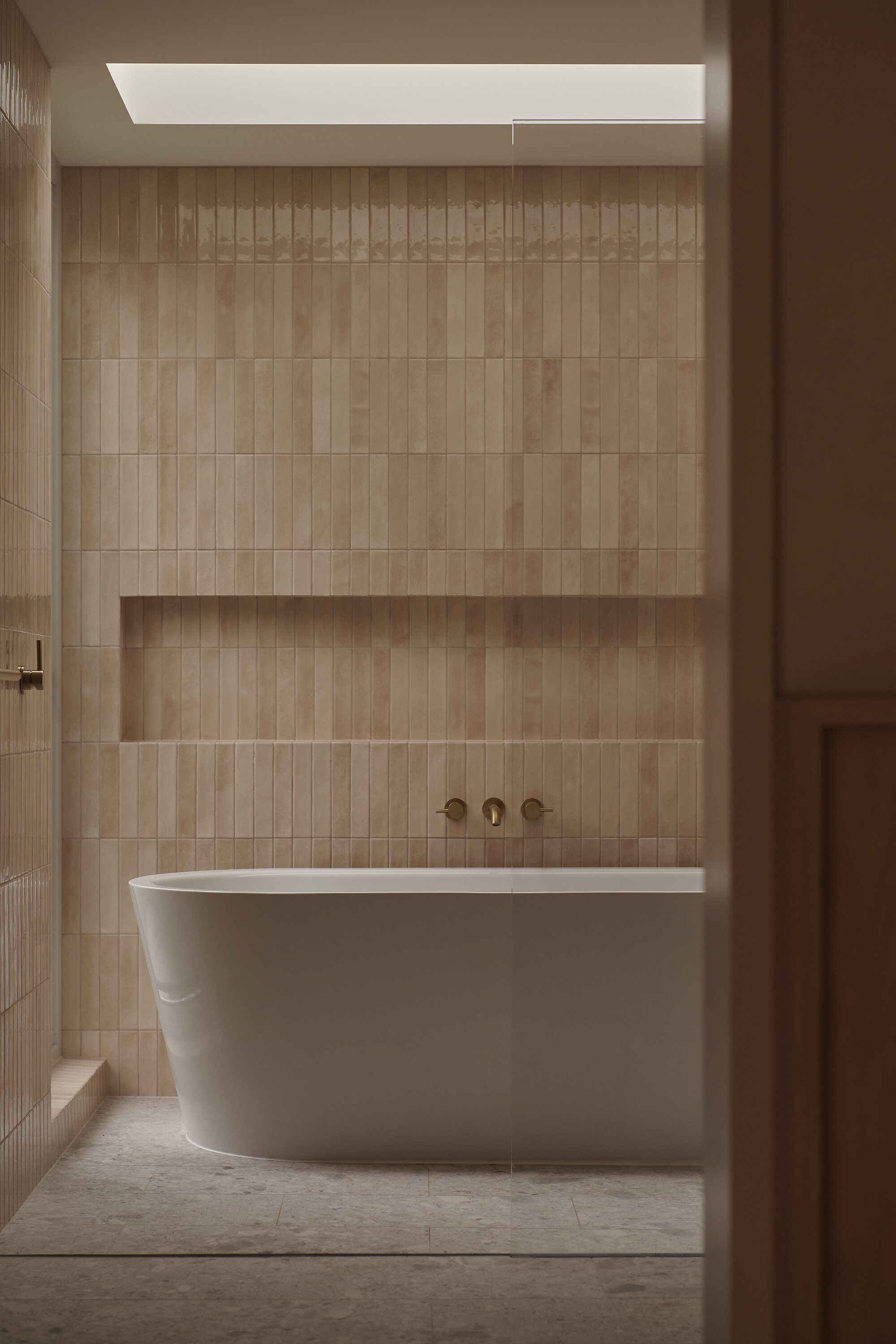
In the master suite, clay-toned render and tiled finishes create a cocooned, textural retreat. The ensuite continues this tonal continuity through refined detailing, fostering warmth and intimacy. This more enclosed atmosphere contrasts with the openness of the living zones, while maintaining an overall cohesion of materials.
Material selections are tactile yet robust, carefully calibrated for longevity in a coastal environment. Throughout, junctions between stone, timber and cabinetry are deliberately minimal, elevating everyday functionality into an expression of crafted architecture.
By retaining and refining the existing home, the project proposes a progressive model for coastal renovation grounded in longevity, material integrity and contextual sensitivity. Rather than overwrite, the design restores and elevates its coastal language, demonstrating the value of considered alteration over expansion.